More than 70,000 autistic teens transition into adulthood each year. Only about 33% of autistic individuals obtain a driver’s license, and it often takes them longer – on average two years – and many don’t achieve this milestone until into their 20s. Lack of driving negatively effects their employment, college attendance, socializing and independence. Our research found combining an AI-based driving simulator with cognitive-behavioral strategies curriculum changed the lives of autistic individuals!
As of June 3rd, 2026…
35 Licenses!
27 Permits!

Outcome Graphs
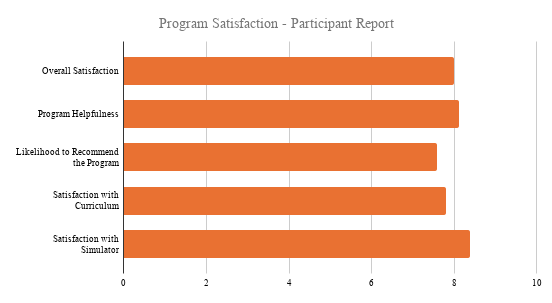
The above graph highlights the average satisfaction of participants who have completed the program over five areas (overall satisfaction, program helpfulness, likelihood to recommend, curriculum satisfaction, simulator satisfaction). Participant’s rated the program on these five areas on a 0-10 rating scale (10=the best possible).
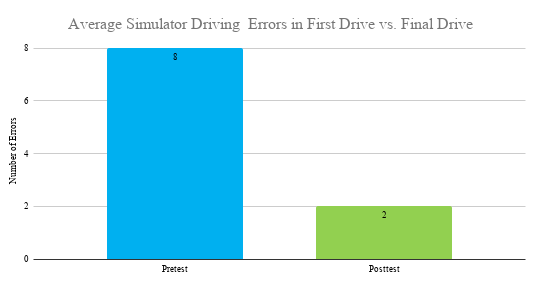
The above graph highlights a decrease in driving errors on the simulator by their last driving session. On average, participants make 8 driving mechanical errors during their first driving session and 2 driving mechanical errors during their last driving session. Participants complete a total of 5 driving simulator sessions.
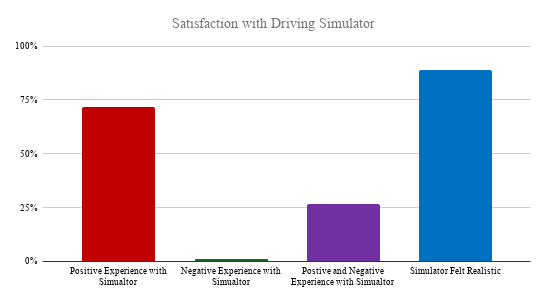
The above graph shows 71.95% of participants had a positive experience with the simulator, 1.22% had a negative experience with the simulator, 26.83% had a positive and negative experience with the simultor, and 89.02% felt the simulator was realistic.

The above graph highlights the increase in interest in pursuing a drivers license after completing the program. Before the program, 67.44% of participants stated that they are interested in pursuing a driver’s license and after the program 90.24% report an interest in pursuing their drivers license.

The above graph highlights a change in driving cognitions (panic concerns, accidents concerns, social conerns, and a total score) after completing the program. Participants completed the Driving Cognitions questionnaire both before and after the program. A paired samples t-test showed a significant decrease in panic related conerns, social-related conerns, and total concerns. No significant difference was found in accident related concerns.